

High-Mix Filling Robots: How to Evaluate Format Changeovers
Contract manufacturers frequently change containers, closures and batch sizes, making changeover and cleaning just as important as a robot's cycle time. A Universal Robots customer case, listed by the company on 16 June 2026, describes modular filling and capping automation at Danish manufacturer GMPack. The case is supplier-published and its reported benefits should be tested for each production environment. Published 2026-10-31 04:14:20 -04:00 (America/New_York).
Why format variation matters
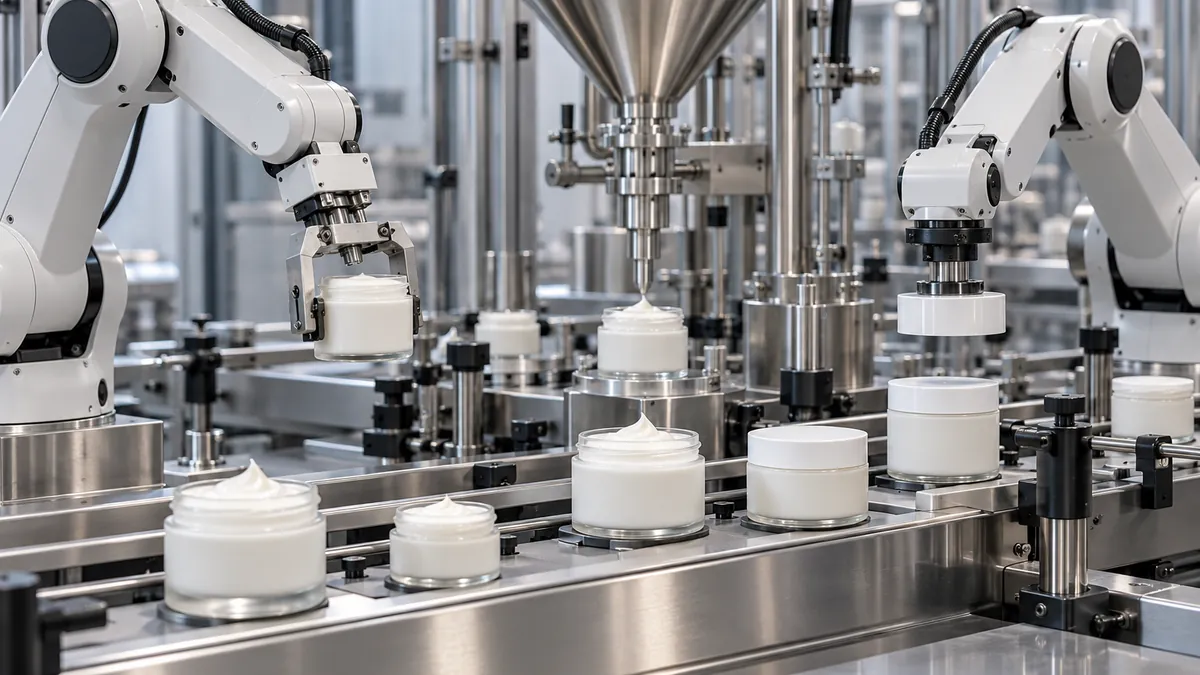
GMPack handles a range of healthcare and cosmetics products, according to the case. The described solution has three modular cream-filling units, each using two robots: one positions empty containers, while another applies caps and places finished products. An integrated printer supports batch traceability. The supplier reports greater consistency and flexibility but does not supply a universal changeover time for every format.
For a comparable project, list container and cap sizes, materials, fill volumes and expected batch sizes. Include unusual shapes and the weakest packaging as well as the most common format. Ask which formats require different grippers, fixtures or machine settings, and which cannot be handled at all.
Test filling and closure quality
Qualified product and quality teams should define fill accuracy, closure integrity and inspection requirements for each product and market. A robot may position a container repeatably while a separate filler or capper produces an unacceptable result. Evaluate the entire process and the interfaces between equipment.
Use representative containers and caps from normal suppliers. Test missing or skewed caps, damaged containers, interruptions and variation in product viscosity where relevant. Agree how nonconforming items are segregated and how operators investigate a recurring fault.
Measure cleaning and changeover
Short production runs can lose much of their available time to changeover. Record the time needed to clear the previous product, clean the equipment, install approved tooling, verify the new recipe and release the first acceptable batch. A quick robot program change alone does not describe the complete transition.
Identify which surfaces may contact product and confirm approved cleaning methods with the equipment supplier and the manufacturer's quality team. Document how the line prevents mix-ups between product batches, labels and caps. Inspection and release procedures should follow the actual product's applicable requirements.
Maintain batch records
Define how batch numbers are generated, printed, checked and connected to production records. Test unreadable print, a printer fault and a restart after an interruption. Decide who can change a recipe and what authorisation is required before production resumes.
A complete acceptance test should measure good containers per shift, rejects, manual intervention, cleaning and downtime across several representative formats. Include integration, fixtures, maintenance, training and consumables in the investment calculation. The best solution is the one that meets the customer's quality and scheduling needs across the actual mix, not merely the fastest demonstration.
Agree on ongoing responsibilities
Before handover, document who maintains each filling module, gripper and printer. Request spare parts, operator training and a procedure for approving new container formats. If several vendors supply the line, define a single escalation route for faults that cross equipment boundaries. Review actual changeover and reject data after commissioning to identify adjustments that need quality approval.
Explore our supplier directory or contact the team with your filling application.