

Recheck Reference Points After Remounting a Robot Arm
After remounting an arm on a mobile base, the base position and tool relationships need review under the project’s requirements even when the same parts are reused.
Browse key parameters and selection resources by component
Map the automation steps across menus, ingredient prep, cooking, serving, and cleaning, with a focus on cooking robots.
Consider welding, painting, assembly, and inspection processes, and verify cycle time and quality requirements.
Focus on small-part assembly, precision handling, inspection, and flexible line changeover.
Assess handling, assembly, and inspection conditions for production tasks in battery, PV, and related industries.
Focus on cleanliness requirements, handled objects, precision, and equipment integration.
Assess system coordination across inbound, picking, transport, sorting, and outbound flows.
Focus on on-site workflows for delivery, cleaning, guidance, and reception tasks.
Verify material properties, cleaning requirements, process steps, and production cycle time.
Distinguish between use scenarios, intended users, and professional operating requirements.
Define selection boundaries from workpieces, processes, fixtures, and production line conditions.
Focus on teaching content, research interfaces, scalability, and equipment maintenance.
Assess applications against crops, agronomy, terrain, and operating time windows.
Design workflows around routes, inspection points, alerts, and human review.
Focus on site environment, mission payload, communications, and coordination with rescue personnel.
From national societies to local associations, quickly find public information sources.
Reference index only; it does not imply any partnership or certification relationship between this site and the listed organizations.
Open the original association websites for publications, activities and industry updates.
External official sources. Publication language and availability depend on each publisher.
After remounting an arm on a mobile base, the base position and tool relationships need review under the project’s requirements even when the same parts are reused.
Robot tool cables move repeatedly with the joints. Routing must respect supplier bend requirements and the full range of workcell motion; a tidy stationary cable can still snag or be pinched in motion.
Base vibration can originate in the support, nearby equipment or the robot’s own motion. Collect reproducible evidence first and have qualified personnel determine causes and remedies.
Robot base fastener checks should follow the manufacturer installation instructions and the site maintenance procedure. Good records make later support work and remounting traceable.
When installation drawings and site conditions disagree, record and assess the deviation before the responsible design and equipment teams decide what to do.
A controller cabinet needs the environment and airflow specified by its manufacturer. Stored cartons, covered inlets or nearby heat sources can change operating conditions.
A robot arm can meet its published specification while its mounting surface contributes to repeatability problems. Review mounting rigidity, flatness and site vibration with the model and application conditions.
A practical evidence checklist for a rehabilitation-robot pilot: patient fit, assistance limits, safety validation, outcome measures and service readiness.
Distinguish a published planning-scene message from an applied update, then verify which scene the subsequent planner actually consumes.
Review the touch links configured for an attached part and confirm the allowed contacts match the gripper and task boundaries.
Check detachment and world placement together when a robot releases an object into a MoveIt planning scene.
Verify both parts of a MoveIt attachment transition, including removal from the world and attachment in the intended robot link frame.
You can close it and load it again. Third-party players may be limited by network or platform restrictions; this site will not automatically leave the current page.
Original videoTurn Concepts into Verifiable Project Metrics
From scenarios and cycle times to acceptance boundaries
Four key boundaries of system integration
Understand technology and applications along the industry chain
Practical ways to read application news
Clarifying interface definitions and collaboration responsibilities
Avoid Misreading Statistical Definitions and Sample Scope
Understand performance claims through test conditions
Different robots call for different reading paths. Fundamentals, model selection, and maintenance materials are organized by category.
Start with pallets, racks, and transfer handovers, and separately verify the vehicle body, scheduling system, and site conditions.
Read in terms of workpieces, end-of-arm tooling, and workstation layout; do not judge whether a complete application is suitable from the word “collaborative” alone.
Filter by teaching platform, programming method, and learning tasks, then check terminals, curricula, and device management.
Distinguish among surgical assistance, rehabilitation, and other medical uses; the applicable scope of a specific product is subject to its formal product documentation.
Consider crops, planting structure, field conditions, and implement tasks together; avoid comparing only the mobile chassis.
Based on the observation, inspection, or operational goal, verify the water area, communications, payload, and recovery method.
Read the key concepts and source material
Read the key concepts and source material
Read the key concepts and source material
Read the key concepts and source material
Read the key concepts and source material
Read the key concepts and source material
Read the key concepts and source material
Read the key concepts and source material
Read the key concepts and source material
Read the key concepts and source material
Read the key concepts and source material
Read the key concepts and source material
No materials in this section yet.
Open the matching case page by category to load product videos on this site. Public demonstrations and solutions compiled by this site are labeled separately and do not represent independent acceptance results.
Observe ingredient dispensing, stir-frying, and serving; a demo menu cannot replace an actual back-of-house trial.
Observe movement and task execution, and distinguish product showcases from capability validation in specific environments.
Watch the commercial cleaning demo, then verify against floor type, contaminants, and supply conditions.
Follow the delivery process from loading and travel to handover, with attention to on-site workflow integration.
Watch the power inspection demo, focusing on how the mobile platform works with inspection tasks.
Watch the teaching product introduction, then review classroom experiment plans and observation recording methods.
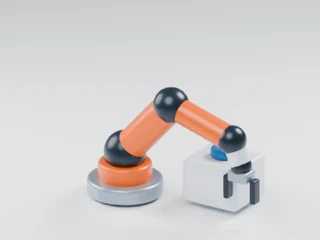
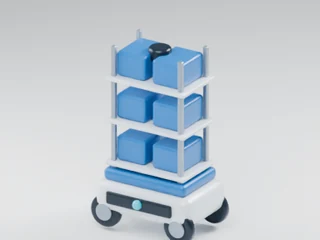
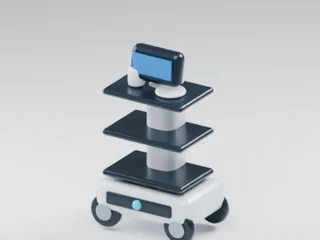
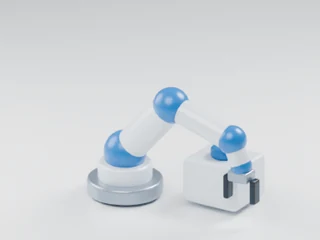
The illustrations are meant to show robot form factors and do not correspond to any specific brand or model; for actual selection, check product documentation and site conditions.
Start with the workpiece and process
IllustrationFrom process to system boundaries
IllustrationConsider handling and scheduling together
IllustrationStart with the menu and kitchen workflow
IllustrationRoutes and handoffs define the workflow
IllustrationDefine the area and maintenance
IllustrationDistinguish demonstrations from real tasks
IllustrationRoutes, loads and communications
IllustrationCheckboxes are used to organize materials for this browsing session; specific model capabilities and delivery terms are subject to supplier documentation and project verification.
Eight industry groups and search fields
IllustrationRegistered facts and capability tags
IllustrationPreparing before submitting public information
IllustrationIssuing entity, requirements, and timing
IllustrationScenario, goals, and delivery boundaries
IllustrationQualification requirements and review materials
IllustrationThe illustrations show component forms; specific models and specifications are subject to manufacturer documentation.
Requirements Documentation | State the Task as Verifiable Conditions
Requirements Documentation | Build the Solution Around Site Conditions
Verification Resources | From Samples to Acceptance Evidence
Integration Resources | Verify Interfaces and Responsibility Boundaries
Validation Documentation | Keep the Conditions, Then Interpret the Results
Integration Documentation | Describe the Scenario, Goals, and Deliverables
Organized by reading path; numbers do not indicate ranking.
Organized by reading path; numbers do not indicate ranking.
Organized by reading path; numbers do not indicate ranking.
Organized by reading path; numbers do not indicate ranking.