

Retail Inventory Robots: How to Test RFID Accuracy in Stores
Retail inventory robots can help staff collect stock information more frequently, but useful data depend on tags, store layout and the process for resolving discrepancies. A 24 November 2025 International Federation of Robotics case study describes PAL Robotics' StockBot at Decathlon stores. This is a review of a historical case, not a new deployment announcement. Published 2026-10-31 04:24:43 -04:00 (America/New_York).
What the system is intended to do
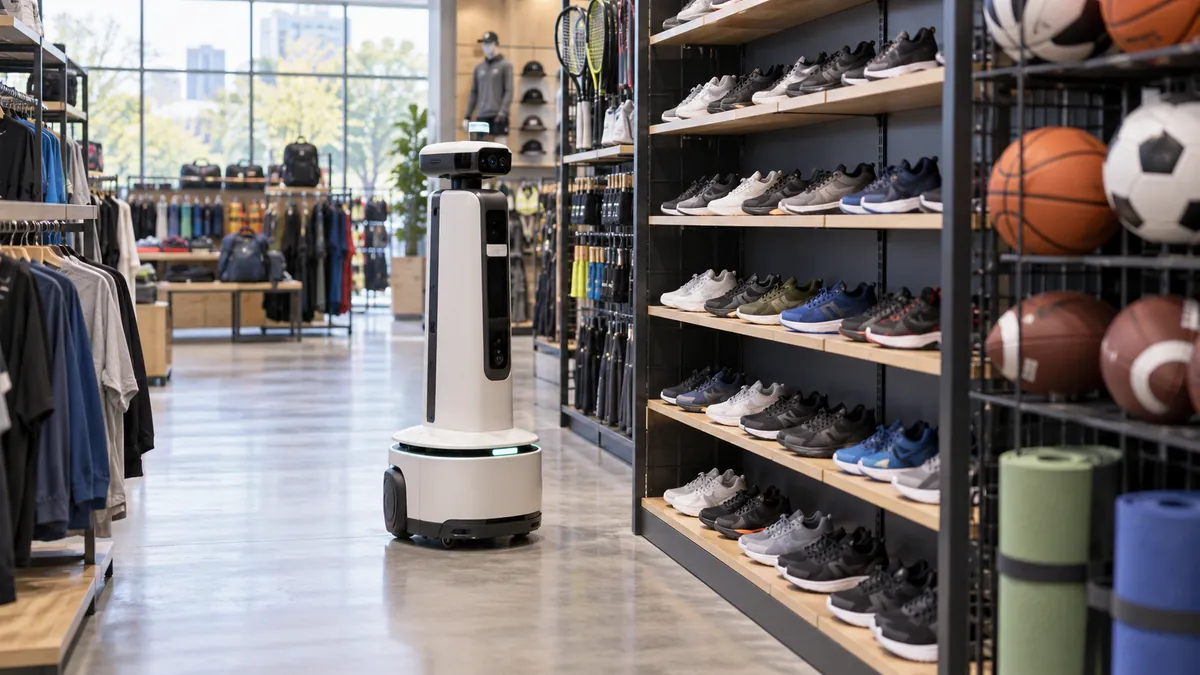
The federation describes a mobile robot equipped with radio-frequency identification readers and antennas. It says the system moves through the store, detects tags and integrates with inventory software. The case describes an initial Singapore deployment followed by use in multiple countries, but the results and setup requirements will vary by store.
A retailer should identify which products carry compatible tags and what information is expected from a scan. A robot may find a tag without establishing that the right size is on the right shelf or that a damaged product is saleable. The project should define which checks remain with employees.
Establish an accuracy baseline
Before a pilot, compare existing inventory records with a carefully checked sample of physical stock. Choose products at different heights and locations, including items behind others, in storage areas and near metal fixtures. Agree how a missed tag, duplicate reading or misplaced product will be counted.
Run the same comparison after robot scans over several representative periods. Record scan coverage, discrepancies, staff review time and the time taken to correct the inventory system. The federation reports a case-specific reduction in counting effort in Singapore; a retailer should measure its own results rather than assuming the same improvement.
Test operation around customers
Store aisles change as staff replenish shelves and shoppers move. Trial routes during the hours the robot is expected to operate, including busy periods, temporary displays and blocked passages. Define how the robot stops, reroutes or requests assistance, and how staff can identify an incomplete scan.
Qualified personnel should assess safety for the complete store environment, including accessibility, emergency access, charging and maintenance. Establish a clear procedure for staff to pause the robot and report an incident. A successful navigation demonstration in an empty aisle is not sufficient evidence for normal trading conditions.
Connect data to action
Agree which system is the source of record, how often updates are transferred and who investigates a discrepancy. If location estimates are used for customer orders, test whether their precision is adequate to find the item. Protect access to store data and clarify how logs are retained or exported.
Calculate the total cost of tags, software, integration, training, maintenance and staff review alongside any savings in counting time. A limited pilot with agreed accuracy, safety and service criteria can show whether the approach improves product availability in the intended store.
Plan ongoing ownership
Store layouts and product tags change over time, so establish who updates the robot's map and checks scan coverage. Train staff to recognise incomplete runs and provide a support contact for failed readers or charging faults. Review accuracy periodically against physical samples, especially after a major refurbishment or a change to the inventory software.
Explore our supplier directory or contact the team with your retail requirements.