

Logistics Robot Testbeds: Lessons from LX Pantos’ Incheon Lab
Logistics operators often need to test several technologies together before deciding how to deploy them in a working warehouse. On 27 October 2026, LX Pantos announced its TDL Lab at the MegaWise Cheongna Logistics Center in Incheon, South Korea. The company describes the lab as a testbed for logistics technologies and operating models. Published 2026-10-31 04:26:46 -04:00 (America/New_York).
What the company announced
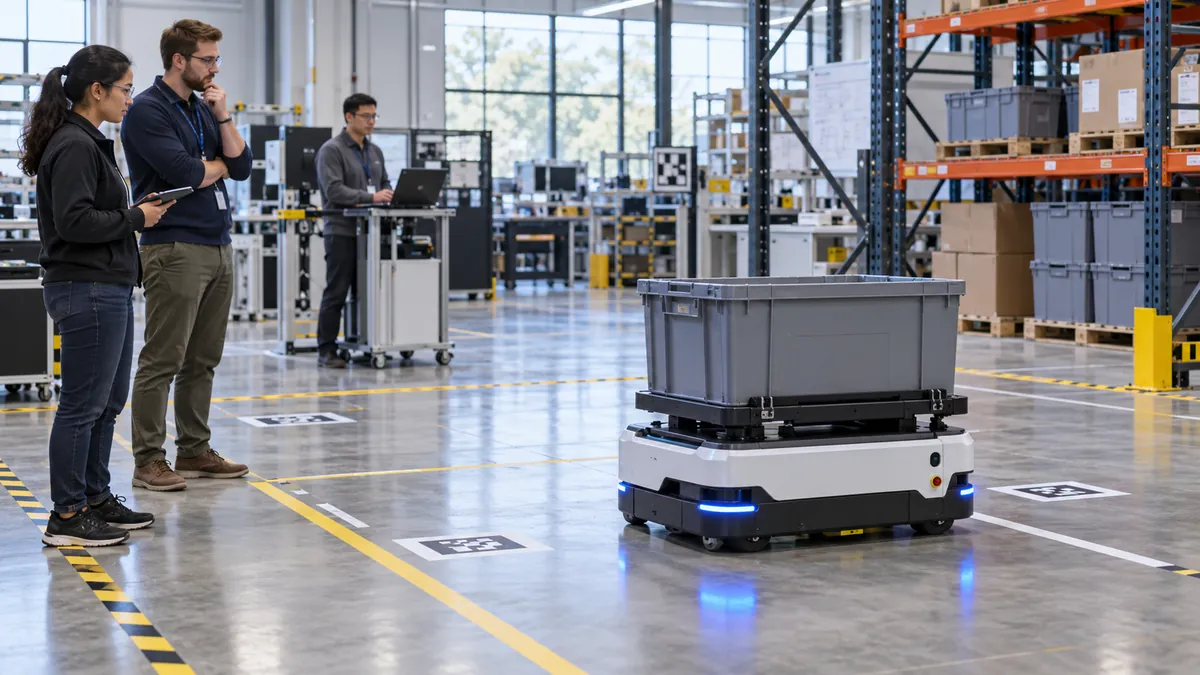
LX Pantos says the lab is embedded in its logistics operations and is intended to evaluate technologies including mobile robots, robotic arms, software and digital twins. Its announcement lists seven technology partners and says the company signed memoranda of understanding with them following the initiative's launch in April 2026.
The company also describes a longer-term roadmap for increasingly automated facilities. A memorandum of understanding and a roadmap are not the same as a completed commercial deployment. The announcement does not provide independently verified performance results for a particular customer warehouse.
Design a useful testbed
A test area should reproduce the constraints that matter in the intended operation: aisle width, floor conditions, load types, traffic, network coverage and the way people work. Start with a defined task and baseline, such as the time and accuracy of a picking or transport process. A visually impressive demonstration is less useful if it cannot be compared with current operations.
Agree which supplier provides each component and how equipment exchanges job, status and fault information. If several robots or control systems share a space, test queuing and recovery as well as successful movement. Record where human intervention is needed and how long an interruption affects downstream work.
Measure outcomes rather than isolated speed
For a picking trial, useful measures may include correct orders, damaged items, time to clear exceptions and operator workload. For transport, measure completed jobs, waiting time, blocked routes and charging or maintenance time. Select measures that reflect the intended customer's operation and compare them over representative shifts.
Test unusual but credible events: a missing tote, changed destination, unavailable network connection or a robot that cannot reach its handoff point. A documented recovery procedure and clear responsibility between suppliers are essential before a pilot moves into production.
Plan a staged deployment
Use a limited operational pilot to check the lab findings against real inventory and staff workflows. Set acceptance criteria, safety responsibilities and a review date before expansion. Qualified site personnel should assess the complete layout, including robot movement, charging, emergency access and interaction with people and vehicles.
Include integration, building changes, software, training and service in the business case. The Incheon lab illustrates a collaborative approach to testing; buyers should still seek evidence for their own products, facilities and service requirements before committing to a wider rollout.
Make the results reusable
Keep a record of equipment versions, test loads, environmental conditions and observed exceptions. When a partner updates its software or the warehouse changes a workflow, rerun the relevant tests instead of assuming prior results still apply. Share the agreed results with operations and maintenance teams so that the people responsible for the eventual deployment understand both the benefits and the limits.
Explore our supplier directory or contact the team with your logistics requirements.