
Robot Import Quotes: Compare DAP and DDP With a Named Place
Published 2026-11-02 21:12:34 -05:00 (America/New_York). Sources checked 2 November 2026. This is an editorial engineering guide; suggested tests below are not reported product test results.
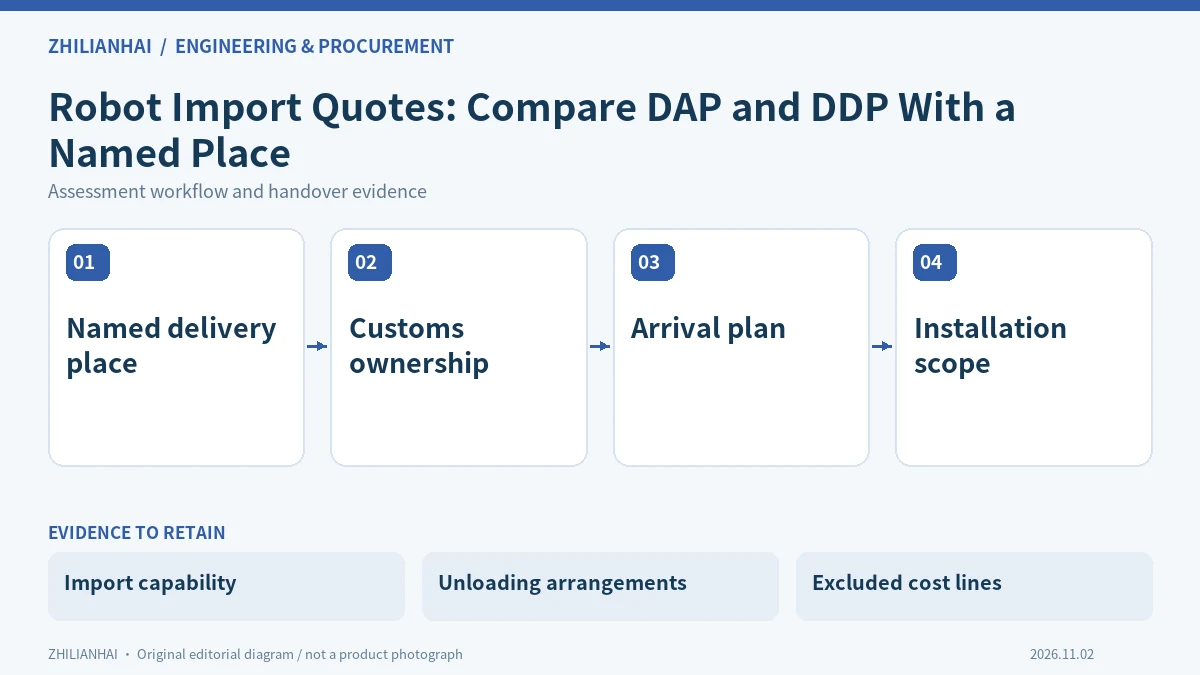
A delivered price needs a precise boundary
Two robot offers can appear comparable while allocating different import and delivery obligations. The ICC checklist distinguishes DAP, where import clearance and duties are for the buyer, from DDP, where the seller undertakes those obligations. It also cautions that practical circumstances may prevent a seller from performing import clearance. This article uses those published distinctions to structure an RFQ; local tax, customs and contract interpretation must be confirmed by the responsible advisers.
Write the chosen rule, the named delivery place and the version of the rules into the quotation request. A country name alone does not identify whether the handover is at a port, a logistics terminal or the factory gate. Do not assume that a familiar three-letter abbreviation includes installation, commissioning, operator training or acceptance of the robot’s performance.
Break the project into visible cost lines
Ask the supplier to show equipment, packaging, freight, insurance where applicable, customs-related responsibilities and inland movement as clearly described items. Add the separate costs of unloading, lifting equipment, moving the robot into position and preparing the installation area. For a heavy cell, these practical arrangements may determine whether the proposed delivery is feasible at the named location.
Clarify who supplies the packing list, commercial documents and technical information needed by the appointed customs representative. The robot model description, supplied accessories and shipment contents should agree across the documents. Classification and valuation decisions require the responsible customs professionals; a vendor’s informal statement that a product is a robot is not enough to establish the correct treatment in every destination.
Check the physical handover scenario
Walk through arrival at the actual site with logistics and facilities staff. Identify vehicle access, opening dimensions, unloading constraints, inspection of visible damage and temporary storage. Distinguish transport damage inspection from functional acceptance. A crate arriving intact does not demonstrate that the delivered controller, software options and tooling match the purchase specification.
Agree who records shipment identifiers and serial numbers, who reports discrepancies and which documents are retained. Where installation is scheduled after delivery, define the permitted storage conditions and responsibility during the gap. These should be explicit project arrangements rather than assumptions attached to a shipping abbreviation. Confirm any limitations with the equipment and logistics suppliers before dispatch.
Compare the complete operating offer
Put the offers into a comparison sheet using the same named place and separately defined commissioning scope. Mark excluded or uncertain items instead of filling them with a guessed zero. Ask whether a quoted price includes the same controller configuration, end effector, software term and service location. A lower delivered price may still require more local integration work.
Keep the final delivery allocation, customs arrangements and installation agreement consistent across the purchase order and supporting documents. Review the arrangements when the destination or shipment configuration changes. The objective is a quotation that operations, logistics and finance can all interpret in the same way, with no implied tariff rate or promise that a general trade term resolves every aspect of importing and commissioning a robot system.
Source and next steps
Reference: ICC Incoterms 2020 checklist and flowcharts, 2024 update. The recommendations in this guide are our proposed procurement and validation questions, not requirements attributed to that reference. Review available robot models, compare manufacturer profiles, or contact our team with the intended task and site constraints.