
Multi-Robot YAML: Verify Parameter Namespaces
ROS 2 parameter addressing includes node names and namespaces, and startup values can be supplied through command-line arguments, YAML or launch configuration. A file can parse without matching the intended node. Deployment acceptance therefore needs the resolved runtime identity and resulting values.
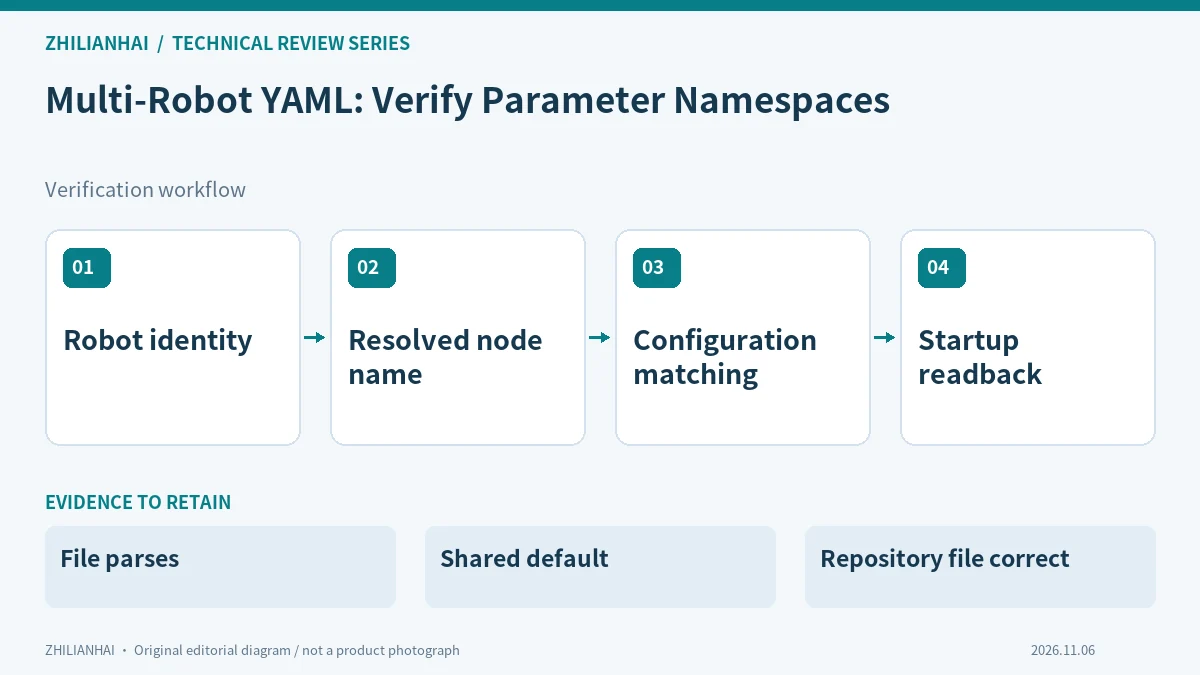
Record resolved node identities
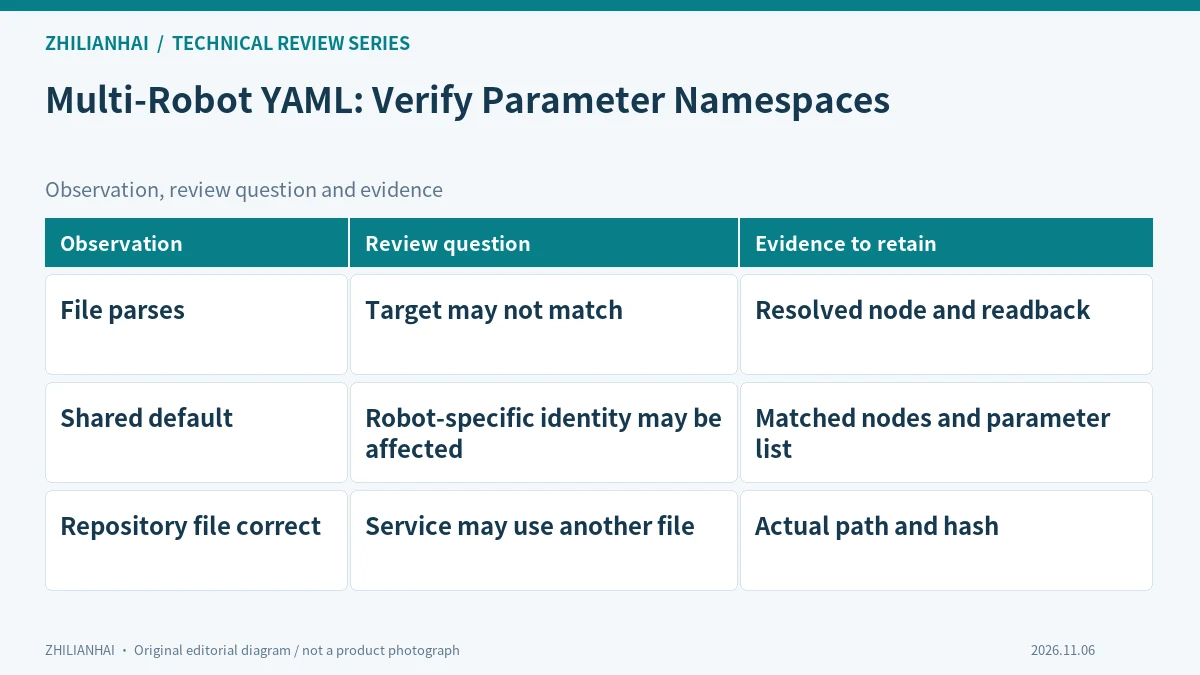
Retain the actual fully qualified node names and namespaces for each robot, distinguishing development shorthand from deployed paths. Renaming or an outer launch namespace can change the intended match. Review the parameter target against the resolved process rather than checking only whether a file resembles the example from which it was copied.
For this review, identify the delivered device, software and configuration revisions first. Record unsupported, disabled and untested capabilities separately. Evidence from another model is useful context, but cannot establish what the delivered combination actually provides. Keep the original input beside the settings used to interpret it.
Review the scope of shared settings
When wildcard matching is used, identify all potential matches and separate shared settings from robot-specific ones. Addresses, identifiers and frame names can carry identity meaning and deserve explicit review. A convenient global default can otherwise be applied across several machines while the files still appear internally consistent to the deployment tool.
Retain the original input and the reason for the decision, rather than a successful screenshot alone. Change only the variables agreed for the comparison, and keep the before-and-after configuration. List conditions that were not exercised explicitly; they should not silently become part of the accepted operating range.
Account for multiple configuration sources
Retain the command line, launch configuration and parameter files actually used, explaining precedence for the delivered implementation. Reviewing one repository file is insufficient if the running service references another path. Compare final readback with the expected configuration and distinguish an unintended default from a deliberately supplied value.
Use the three illustrated observations as starting questions, rather than as diagnoses of an installation that has not been inspected. Check record completeness, units and identity before selecting the next observation. An unresolved result is more informative than a confident explanation assembled from missing fields or unrelated test runs.
Use distinguishable target checks
In an isolated environment, give two node groups distinguishable non-sensitive test values and verify the intended scope. A hazardous physical action is unnecessary to demonstrate parameter matching. Readback, session identity and application state provide interpretable evidence, with any additional functional exercise performed only through the approved procedure for that installation.
Let the site owner choose an approved isolated way to exercise relevant exceptions. Record normal operation, the exceptional condition and recovery separately. The purpose is to establish how the application recognises and explains untrustworthy input, without requiring production equipment to act on deliberately invalid results.
Deliver a deployment-to-node map
Link robot identity, resolved node name, file hash and startup snapshot. Repeat matching checks after adding a robot, changing namespaces or restructuring launch layers. State the nodes actually reviewed. Passing a YAML syntax check is a useful preparation step, not proof that every running participant received the intended values.
Deliver the configuration, representative samples, result table and unresolved questions together. Agree who reviews subsequent changes. The receiving team should be able to select one conclusion and trace it back to its input and decision path without relying on the original author to reconstruct the missing steps.
Original documentation and further reading
Continue with related articles in this section, or use selection guides to prepare the next review. Apply the device-specific documentation and agreed operating conditions when implementing a test.