
Review Contact Geometry Behind a Simulated Gripper Closure
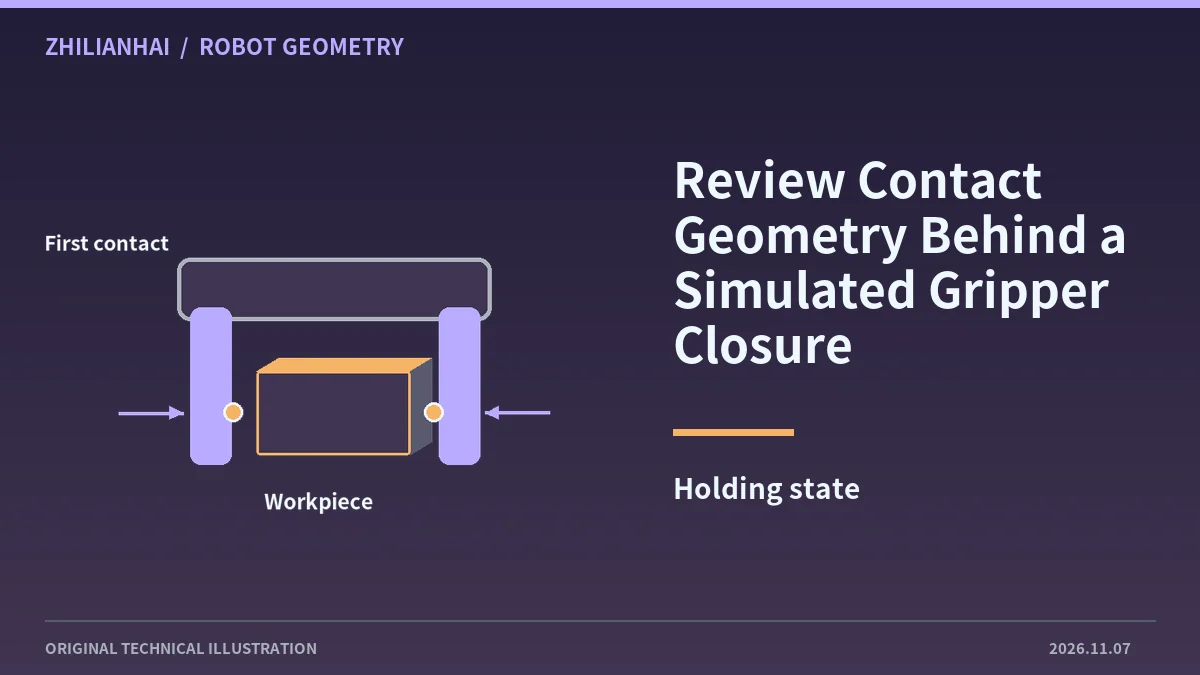
Identify the active shapes
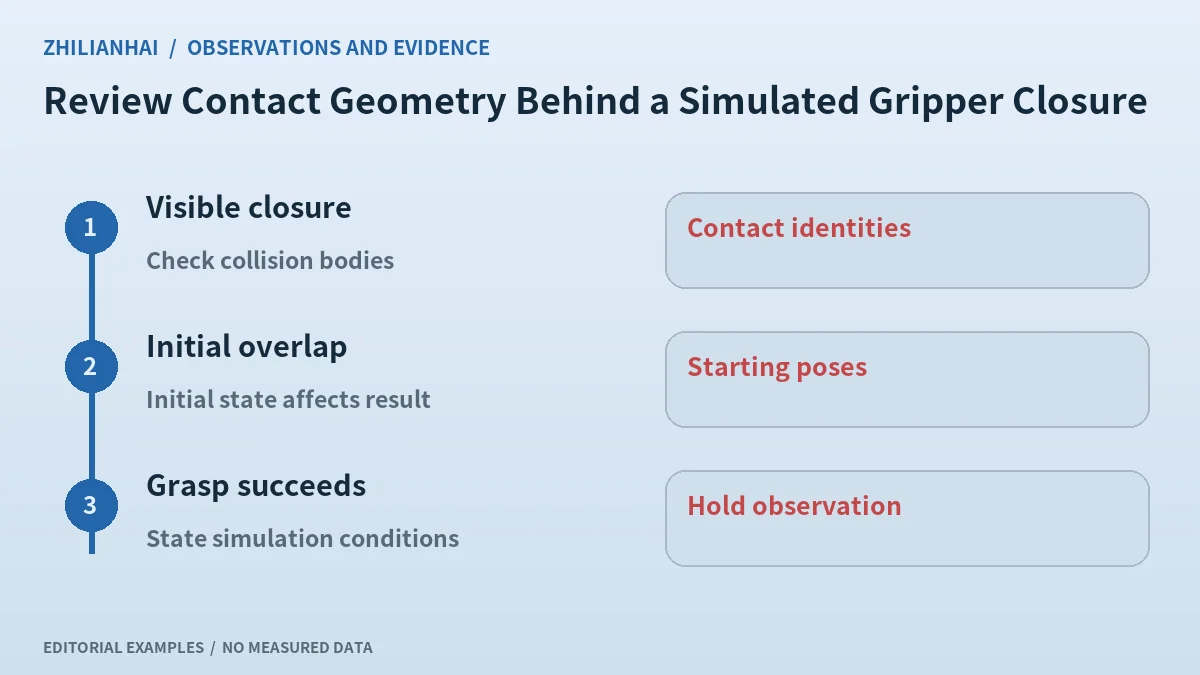
Show the collision layers for both fingers and the part. Record which link or body owns each shape. A hidden approximation or shifted shape can contact the part away from the visible fingertip.
Separate initial overlap from closure
Record the part and finger positions before motion, then inspect first contact during closure. If the shapes already overlap at initialization, subsequent motion may reflect correction of that overlap rather than a normal grasp approach.
Check whether both fingers participate
Inspect contact identities and positions reported by the solver alongside the command and part trajectory. One-sided contact, two-sided contact and a travel-limit condition can look similar in a still image.
Review holding as a later stage
After contact, observe whether the part remains held under the modeled conditions. Retain model, contact settings and load assumptions. Physical holding performance depends on real parts and their conditions.
Deliver a repeatable setup
Retain opening width, part pose, geometry revision and first-contact evidence. Revisit these conditions when changing a finger or part so the simulated observation can be reproduced.
Original documentation and further reading
Continue with related articles in this section, or use selection guides to prepare the next review. Apply the device-specific documentation and agreed operating conditions when implementing a test.