
When a Latest Transform Can Hide Sensor Misalignment
Name the query semantics
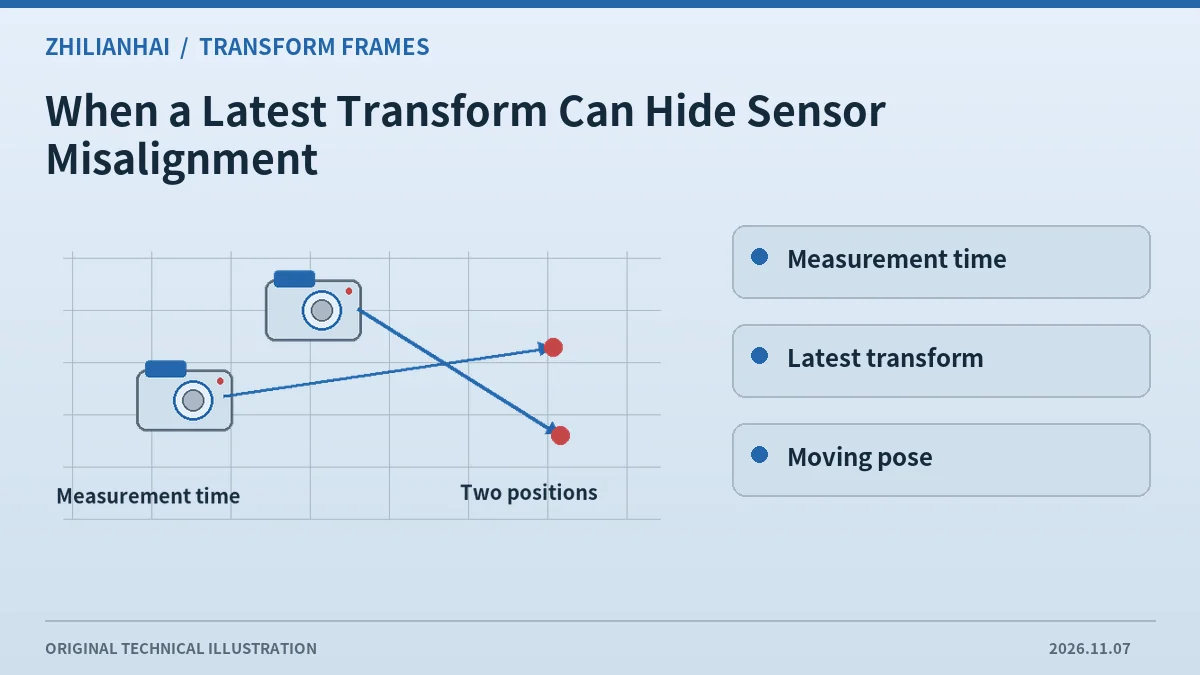
Document latest lookups separately from measurement-time lookups. Both calls may succeed while producing coordinates that describe different robot poses and timing boundaries.
Choose a sample with motion
A stationary robot can produce nearly equal answers from both queries. Use an offline sample with base rotation or camera motion, retaining the input and pose change around acquisition.
Overlay both projected positions
Transform the same point using both times. Label the adopted transform times and resulting positions. Explain any separation through pose history instead of preferring the smoother-looking display.
Separate debugging from adoption
A latest query can help diagnose connectivity. Any application fallback needs an explicit validity boundary, operating conditions and presentation so the diagnostic convenience does not silently change input meaning.
Retain replay evidence
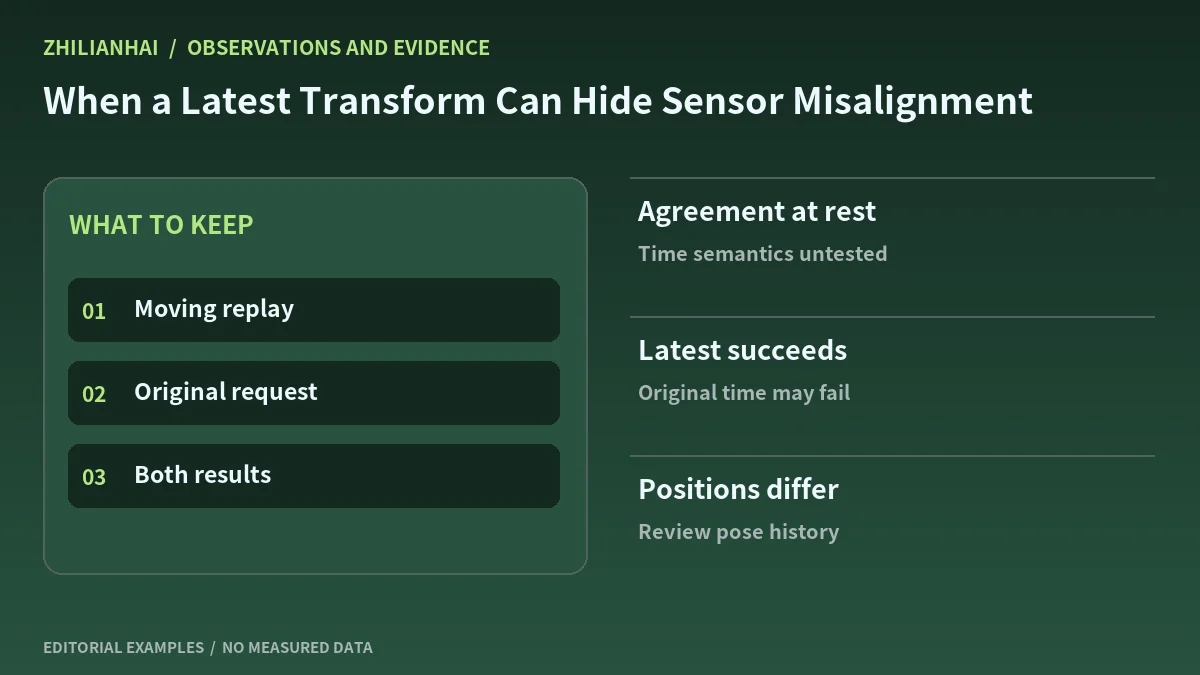
Keep the measurement, both query results, robot pose and missing-transform response. Reuse the moving sample after changing caching or operating mode to review the same timing behavior.
Original documentation and further reading
Continue with related articles in this section, or use selection guides to prepare the next review. Apply the device-specific documentation and agreed operating conditions when implementing a test.