
Establish When a Planning Scene Update Reaches MoveIt
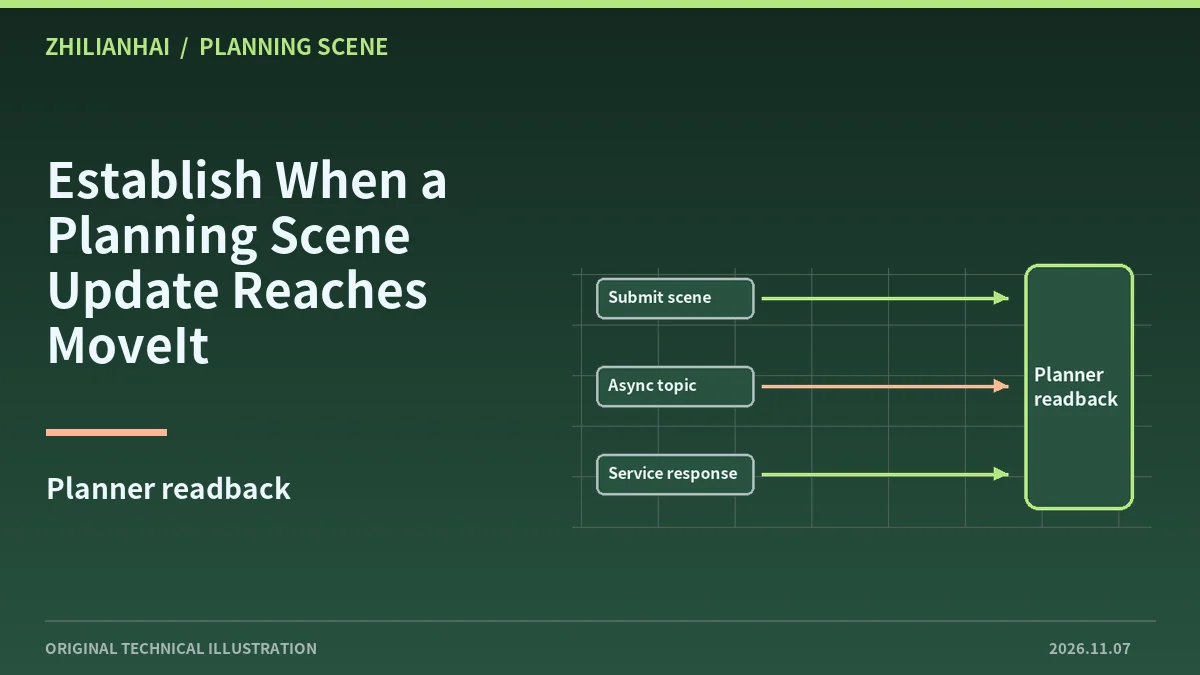
Specify planning prerequisites
List the object IDs, poses and attachment states needed by the next plan. Inspect the actual planner’s scene. A separate viewer showing an object does not prove that the planner has applied the same change.
Distinguish update paths
The tutorial illustrates asynchronous publication and a service path that waits for application. Retain the actual API and response semantics. When planning depends on the update, define the ordering condition explicitly.
Join request and acknowledgement
Associate change identity, submission, service response or scene readback and the next planning request. Before retrying, establish whether the part was already added or moved. A fixed delay alone provides little evidence across different loads.
Observe delayed application
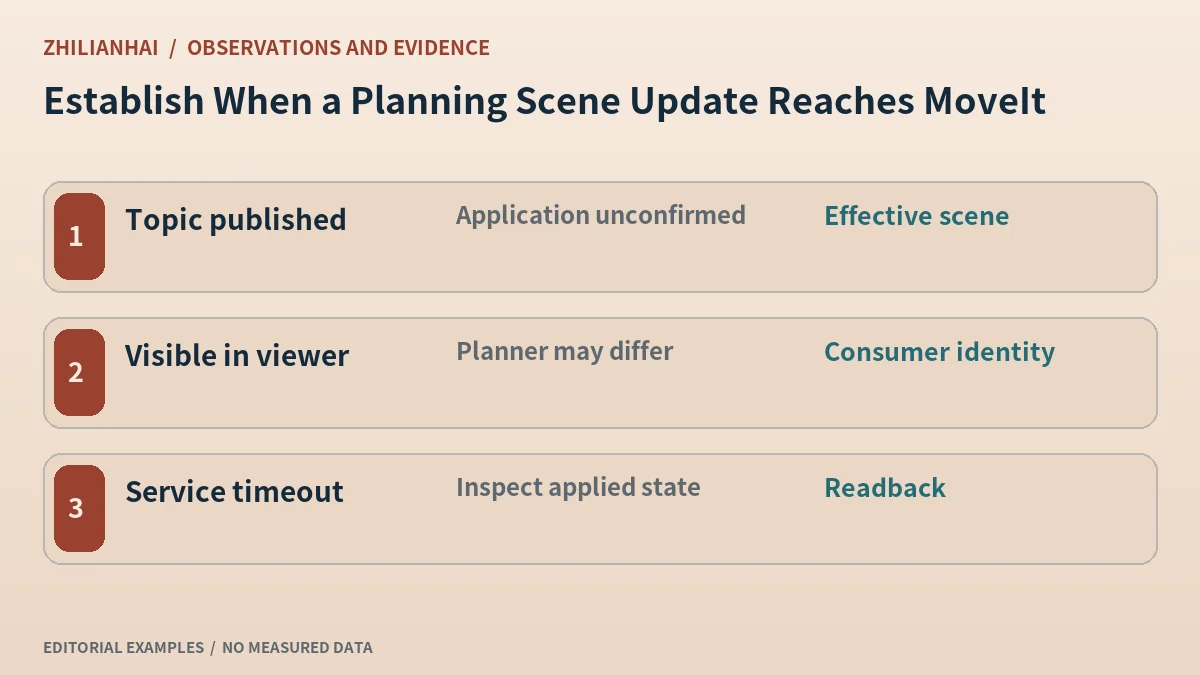
Compare immediate planning and planning after confirmation in an isolated model. Preserve the object sets for both. If paths differ, inspect scene application order before attributing the difference to the planning algorithm.
Deliver the receiving boundary
Document which nodes consume the monitored scene, which need independent application and how to read state after a timeout. Each recorded plan should have an explainable scene revision.
Original documentation and further reading
Continue with related articles in this section, or use selection guides to prepare the next review. Apply the device-specific documentation and agreed operating conditions when implementing a test.