
Verify a Bridged Gazebo Service at Both Endpoints
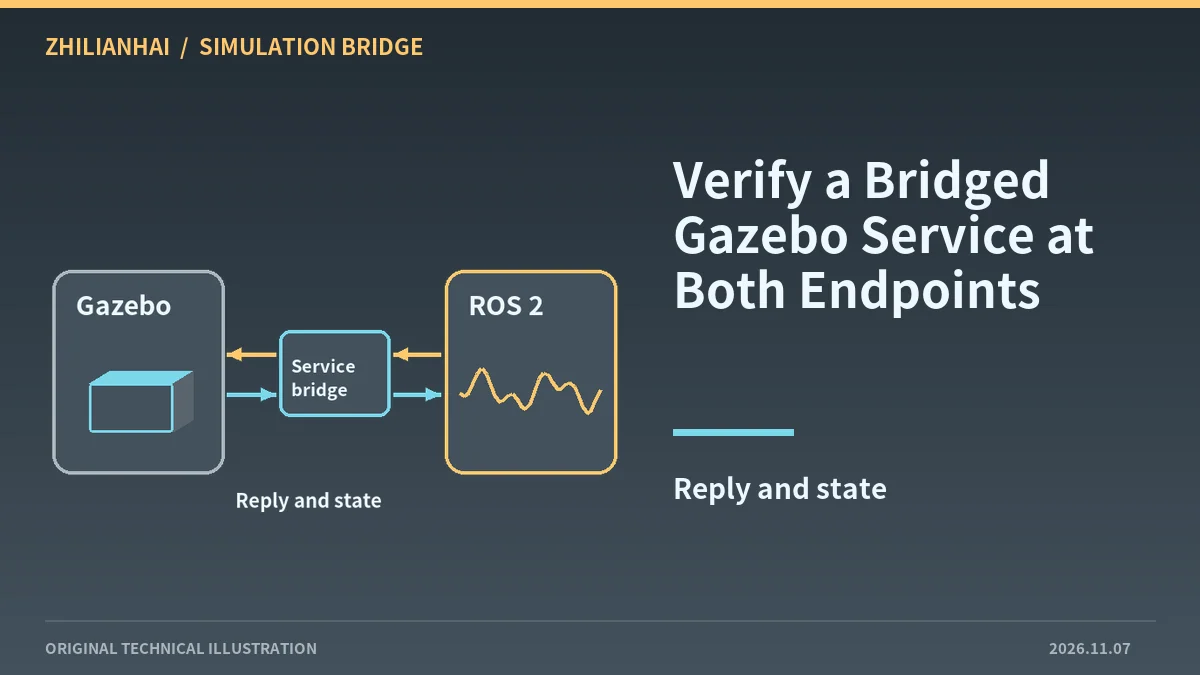
Identify the service target
Check world scope, endpoint types and bridge version. The upstream example uses world control. Verify support in the deployed package and do not infer routing solely from a visible service name.
Retain the actual request
In isolated simulation, keep target, request contents and run identity. Separate client submission from target receipt and verify the active world is the intended test environment.
Interpret response boundaries
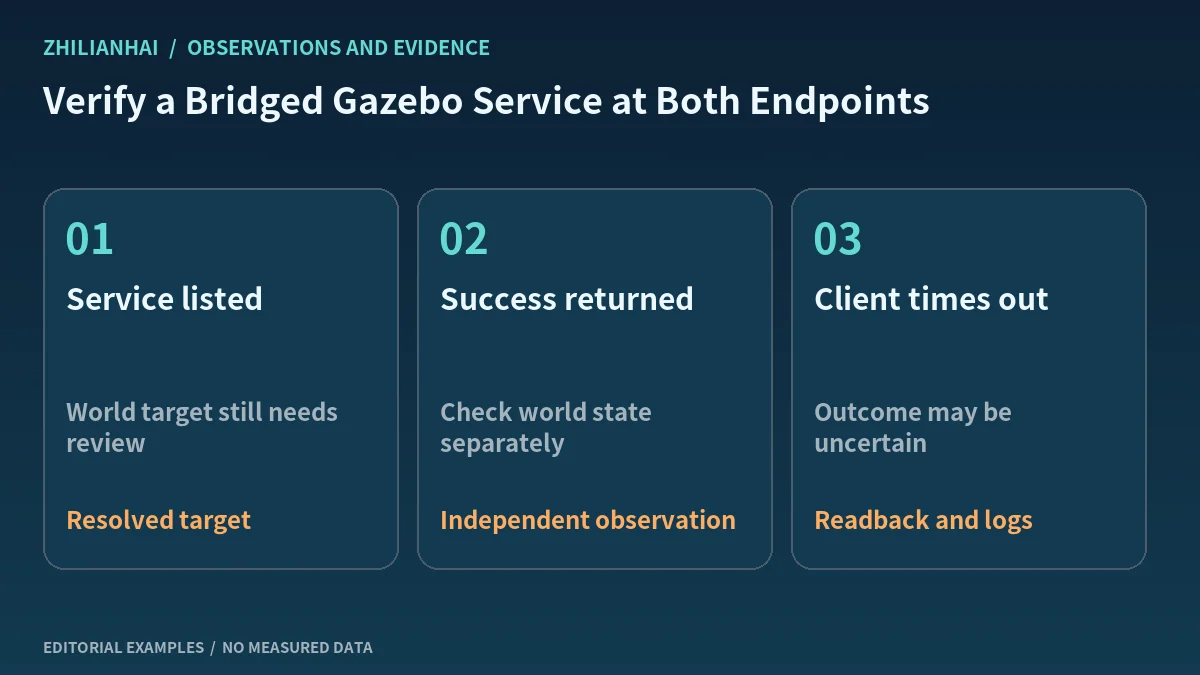
Identify what responses, errors and timeouts describe. A success flag supports service handling, while actual world state remains an observation to check. After a timeout, inspect state before retrying.
Observe the outcome independently
For a pause-state change, retain the service response and a time or activity observation from that same world. A view from another instance or previous run cannot establish the current outcome.
Deliver request-to-outcome evidence
Retain bridge endpoints, types, requests, responses and world state, including unresolved outcomes and recovery conditions. Revisit with a matched isolated sample after updates.
Original documentation and further reading
Continue with related articles in this section, or use selection guides to prepare the next review. Apply the device-specific documentation and agreed operating conditions when implementing a test.