
Define One Task in a Repeated Mobile Robot Trial
To compare mobile robots, first define when one task starts and ends and how waiting and human intervention are counted.
Cover image: AI-generated conceptual illustration, not a photograph of an actual product or project.
Write start and end events
For example, define task acceptance as the start and confirmed delivery handover as the end; the project parties agree the actual definition.
List intermediate steps
Record loading, travel, waiting, obstacle response, unloading and charging-related steps, specifying which enter the cycle measure.
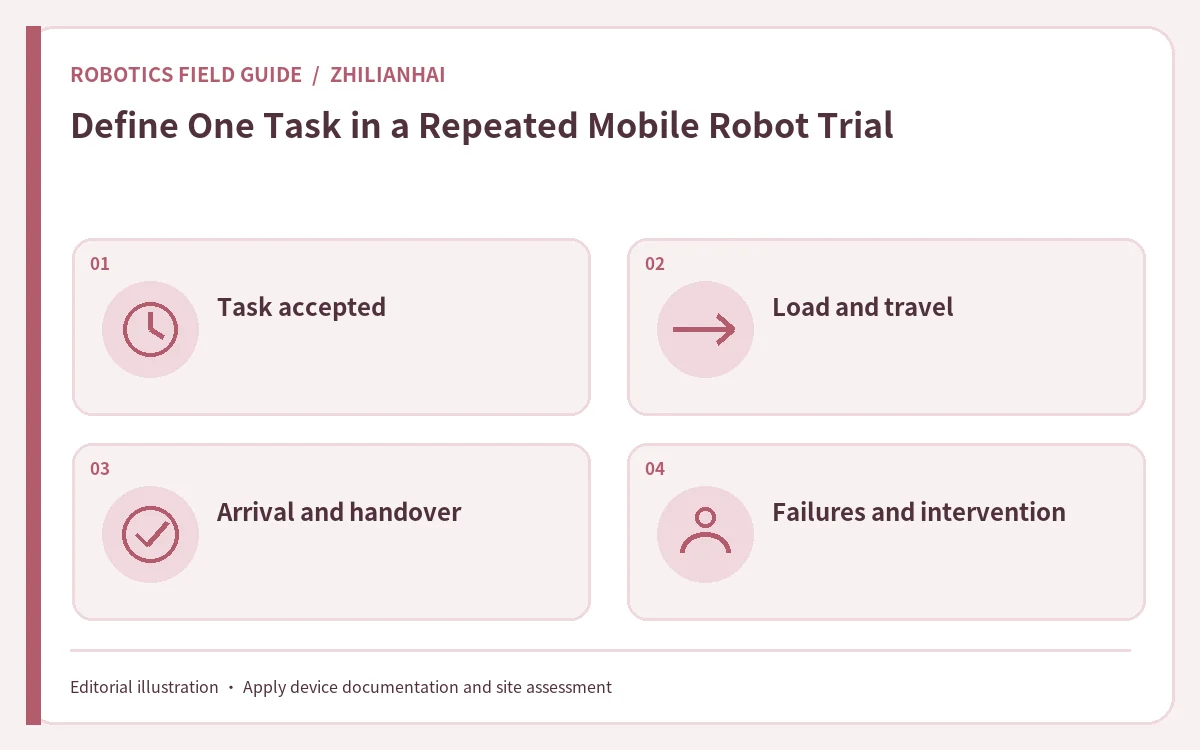
Count failures and intervention
Record incomplete tasks, retries and assistance separately, explaining the metric instead of showing only the average of successful runs.
Align comparison conditions
Keep route, load, traffic and device state as comparable as possible, and state differences and limitations.
Applying the checklist: a hypothetical example
One proposal may end timing at station arrival while another includes unloading confirmation. Align the definition before comparing durations and identify excluded steps.
Sources and application limits
This guide refers to NIST: mobile robot performance. Examples and review steps are editorial guidance; use the documentation for the actual device and qualified assessment.
Continue to company directory and robot selection guides.