
Assess End-Effector Hazards in a Robot Application
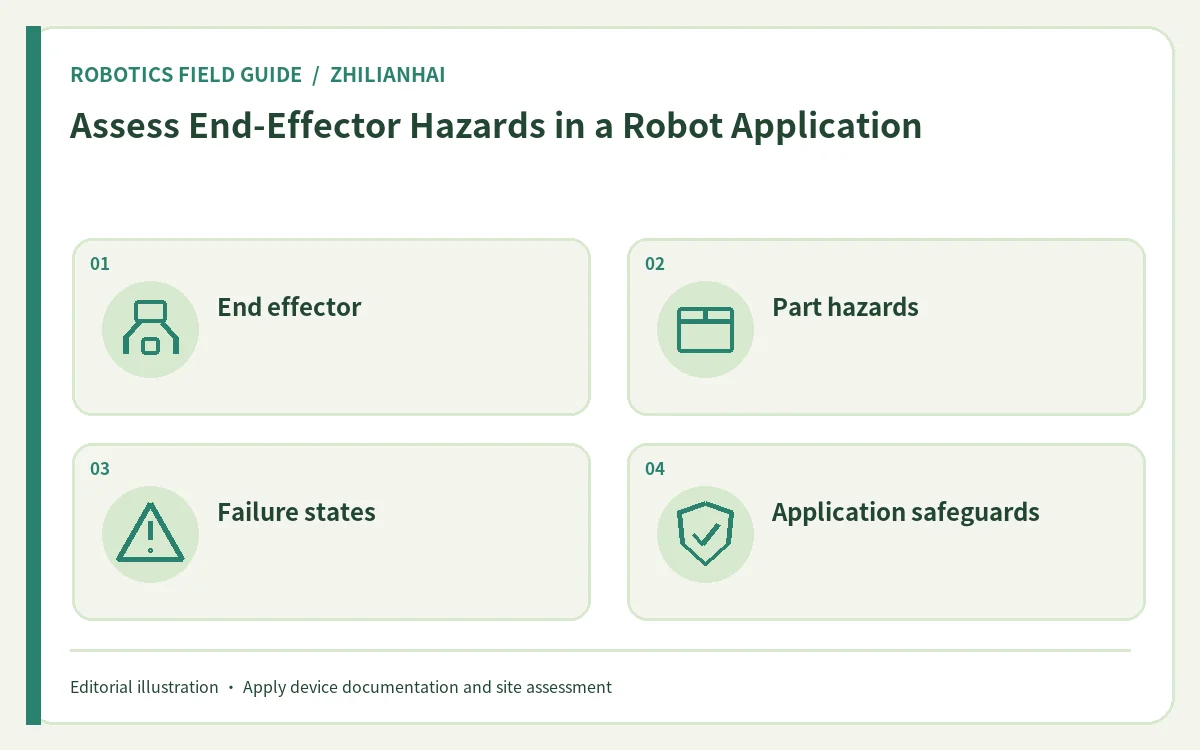
The end effector determines how a robot contacts a part. Gripper fingers, cutting tools, welding equipment and handled materials can create different hazards that must be assessed in context.
Cover image: AI-generated conceptual illustration, not a photograph of an actual product or project.
List contacts and energy
Identify relevant clamping, cutting, temperature, electrical or pneumatic hazards, along with part mass, sharp edges and falling-part risks.
Cover task phases
Review automatic processing, teaching, changeover, cleaning and maintenance. Each can change where people are, the tool state and the safeguards needed.
Review failure states
Consider loss of grip, supply interruption, misplaced parts and tool detachment. Determine validation of controls from the actual equipment and risk assessment.
Update handover evidence
Retain the tool inventory, applicable documentation, hazard analysis and validation evidence. Reassess after a new tool or part rather than relying only on the arm documentation.
Applying the checklist: a hypothetical example
A sharp cutting tool can introduce hazards not covered by an earlier soft-gripper assessment on the same arm. Reidentify the tool, part and maintenance tasks and have the responsible team review safeguards and validation.
Sources and application limits
This guide refers to Universal Robots: application risk assessment. Examples and review steps are editorial guidance; use the documentation for the actual device and qualified assessment.
Continue to company directory and robot selection guides.