
Use Common Start and End Conditions in Robot Acceptance Tests
Two robot solutions can perform the same action yet produce incomparable times if measurement starts or ends at different events. Agree the task events and measurement method first.
Cover image: AI-generated conceptual illustration, not a photograph of an actual product or project.
Define the start event
Specify whether timing begins at task receipt, part availability, operator confirmation or robot motion, and use the same definition for each solution.
Define the end event
State whether the end requires stable placement, release, handover confirmation or robot return to standby.
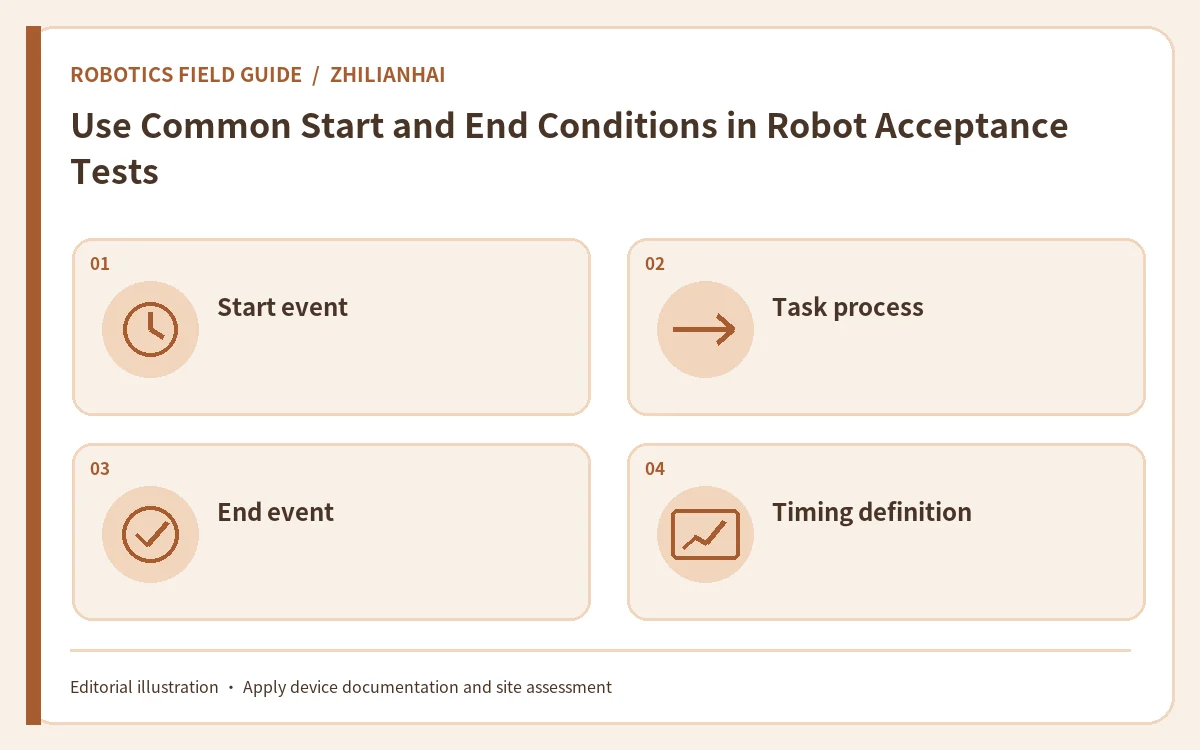
Review the timing source
Retain source and precision for device logs, external timing or manual records; check time bases when comparing systems.
Explain waits and exceptions
State how feed waits, retries, stoppages and intervention are counted rather than basing procurement on ideal cycles alone.
Applying the checklist: a hypothetical example
If one party times from robot motion and another from part availability, align the events and still record feed waiting and equipment motion separately before comparing numbers.
Sources and application limits
This guide refers to NIST: robotic performance assessment. Examples and review steps are editorial guidance; use the documentation for the actual device and qualified assessment.
Continue to company directory and robot selection guides.