
Does a Docked Mobile Manipulator Automatically Pick Accurately?
Parking the mobile base near a workstation is only one step in a picking task. Base position and orientation, workstation reference, sensor calibration and tooling condition can all affect the end effector’s ability to reach the target.
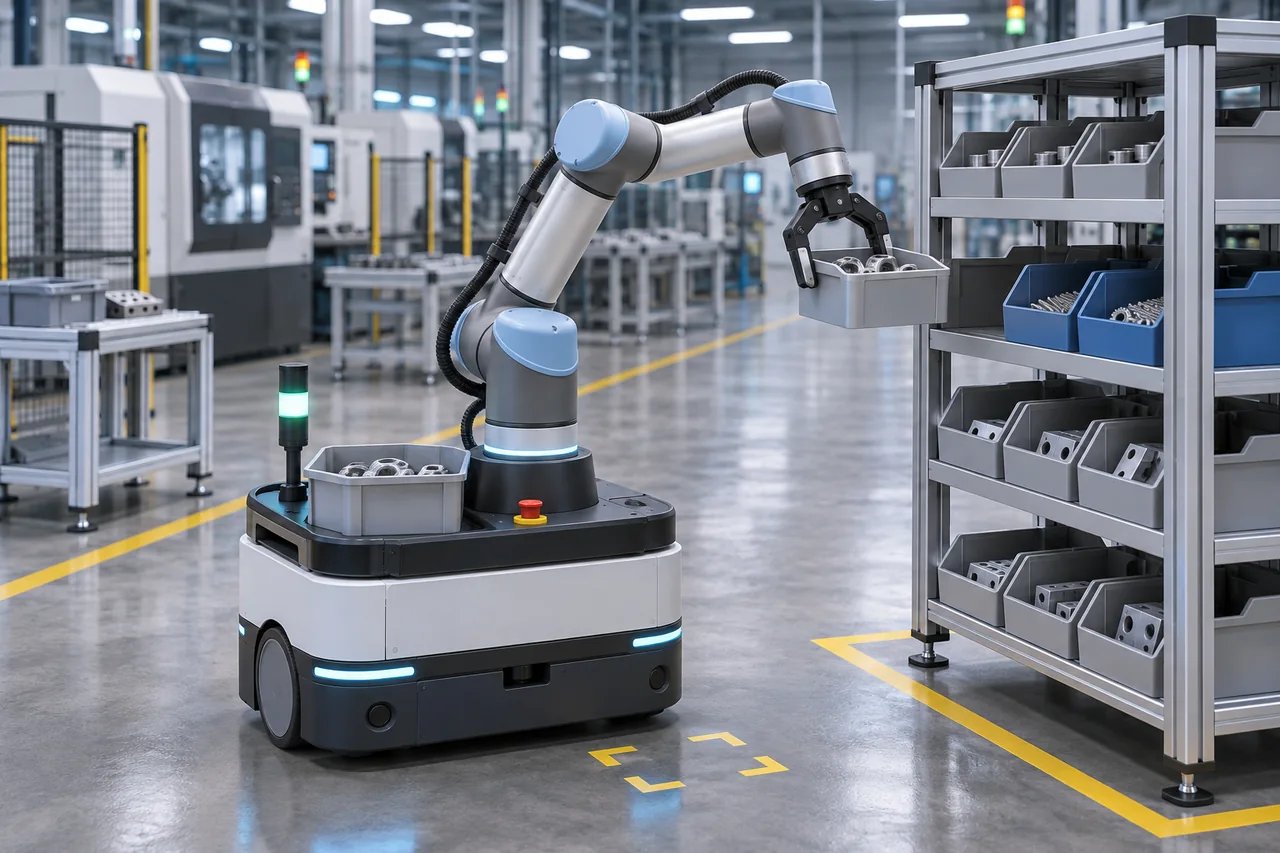
Measure the base and tool separately
Define the workstation reference and measurement method. Record the base position and orientation at each dock, then record tool positioning and picking outcomes. Report the two separately rather than treating one as whole-system accuracy.
Check reference and calibration versions
The relationship between station markers, camera, base and arm depends on calibration. After moving equipment, changing a tool or altering a station, use the supplier’s procedure to decide what needs rechecking. Record equipment and software versions.
Repeat the actual task
Use the intended part, shelf location and permitted speed. Log successes, failures, re-localizations and human interventions. Cover representative starting positions in the intended task range instead of demonstrating only the best run.
Do not transfer someone else’s numbers
NIST research discusses measurement of docking and positioning for a particular mobile manipulator. Its measured values belong to that setup and those conditions; they are not a guarantee for a commercial product. Agree acceptance thresholds for the actual task.
Sources and application limits
These public references provide background; use the documentation for the actual equipment and applicable local requirements: